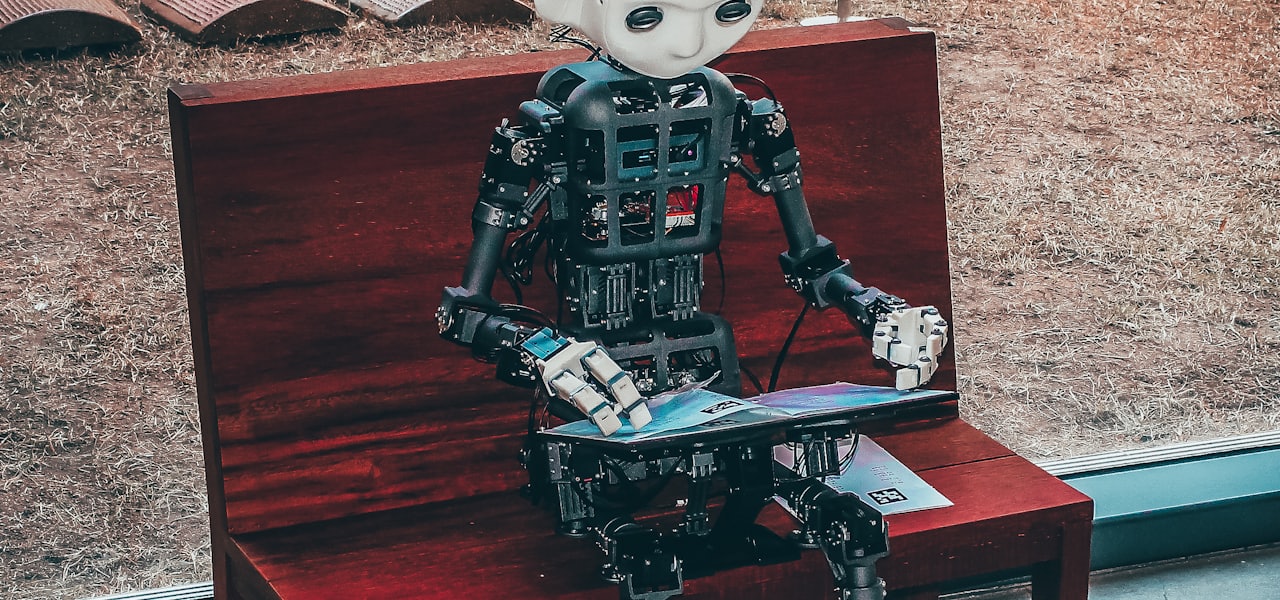
Source criticism (or information evaluation) is the process of evaluating an information source, i.e.: a document, a person, a speech, a fingerprint, a photo, an observation, or anything used in order to obtain knowledge. In relation to a given purpose, a given information source may be more or less valid, reliable or relevant. Broadly, "source criticism" is the interdisciplinary study of how information sources are evaluated for given tasks. == Meaning == Problems in translation: The Danish word kildekritik, like the Norwegian word kildekritikk and the Swedish word källkritik, derived from the German Quellenkritik and is closely associated with the German historian Leopold von Ranke (1795–1886). Historian Wolfgang Hardtwig wrote: His [Ranke's] first work Geschichte der romanischen und germanischen Völker von 1494–1514 (History of the Latin and Teutonic Nations from 1494 to 1514) (1824) was a great success. It already showed some of the basic characteristics of his conception of Europe, and was of historiographical importance particularly because Ranke made an exemplary critical analysis of his sources in a separate volume, Zur Kritik neuerer Geschichtsschreiber (On the Critical Methods of Recent Historians). In this work he raised the method of textual criticism used in the late eighteenth century, particularly in classical philology to the standard method of scientific historical writing. (Hardtwig, 2001, p. 12739) Historical theorist Chris Lorenz wrote: The larger part of the nineteenth and twentieth centuries would be dominated by the research-oriented conception of historical method of the so-called Historical School in Germany, led by historians as Leopold Ranke and Berthold Niebuhr. Their conception of history, long been regarded as the beginning of modern, 'scientific' history, harked back to the 'narrow' conception of historical method, limiting the methodical character of history to source criticism. (Lorenz, 2001) In the early 21st century, source criticism is a growing field in, among other fields, library and information science. In this context source criticism is studied from a broader perspective than just, for example, history, classical philology, or biblical studies (but there, too, it has more recently received new attention). == Principles == The following principles are from two Scandinavian textbooks on source criticism, written by the historians Olden-Jørgensen (1998) and Thurén (1997): Human sources may be relics (e.g. a fingerprint) or narratives (e.g. a statement or a letter). Relics are more credible sources than narratives. A given source may be forged or corrupted; strong indications of the originality of the source increases its reliability. The closer a source is to the event which it purports to describe, the more one can trust it to give an accurate description of what really happened A primary source is more reliable than a secondary source, which in turn is more reliable than a tertiary source and so on. If a number of independent sources contain the same message, the credibility of the message is strongly increased. The tendency of a source is its motivation for providing some kind of bias. Tendencies should be minimized or supplemented with opposite motivations. If it can be demonstrated that the witness (or source) has no direct interest in creating bias, the credibility of the message is increased. Two other principles are: Knowledge of source criticism cannot substitute for subject knowledge: "Because each source teaches you more and more about your subject, you will be able to judge with ever-increasing precision the usefulness and value of any prospective source. In other words, the more you know about the subject, the more precisely you can identify what you must still find out". (Bazerman, 1995, p. 304). The reliability of a given source is relative to the questions put to it. "The empirical case study showed that most people find it difficult to assess questions of cognitive authority and media credibility in a general sense, for example, by comparing the overall credibility of newspapers and the Internet. Thus these assessments tend to be situationally sensitive. Newspapers, television and the Internet were frequently used as sources of orienting information, but their credibility varied depending on the actual topic at hand" (Savolainen, 2007). The following questions are often good ones to ask about any source according to the American Library Association (1994) and Engeldinger (1988): How was the source located? What type of source is it? Who is the author and what are the qualifications of the author in regard to the topic that is discussed? When was the information published? In which country was it published? What is the reputation of the publisher? Does the source show a particular cultural or political bias? For literary sources complementing criteria are: Does the source contain a bibliography? Has the material been reviewed by a group of peers, or has it been edited? How does the article/book compare with similar articles/books? == Levels of generality == Some principles of source criticism are universal, other principles are specific for certain kinds of information sources. There is today no consensus about the similarities and differences between source criticism in the natural science and humanities. Logical positivism claimed that all fields of knowledge were based on the same principles. Much of the criticism of logical positivism claimed that positivism is the basis of the sciences, whereas hermeneutics is the basis of the humanities. This was, for example, the position of Jürgen Habermas. A newer position, in accordance with, among others, Hans-Georg Gadamer and Thomas Kuhn, understands both science and humanities as determined by researchers' preunderstanding and paradigms. Hermeneutics is thus a universal theory. The difference is, however, that the sources of the humanities are themselves products of human interests and preunderstanding, whereas the sources of the natural sciences are not. Humanities are thus "doubly hermeneutic". Natural scientists, however, are also using human products (such as scientific papers) which are products of preunderstanding (and can lead to, for example, academic fraud). == Contributing fields == === Epistemology === Epistemological theories are the basic theories about how knowledge is obtained and are thus the most general theories about how to evaluate information sources. Empiricism evaluates sources by considering the observations (or sensations) on which they are based. Sources without basis in experience are not seen as valid. Rationalism provides low priority to sources based on observations. In order to be meaningful, observations must be explained by clear ideas or concepts. It is the logical structure and the well definedness that is in focus in evaluating information sources from the rationalist point of view. Historicism evaluates information sources on the basis of their reflection of their sociocultural context and their theoretical development. Pragmatism evaluate sources on the basis of how their values and usefulness to accomplish certain outcomes. Pragmatism is skeptical about claimed neutral information sources. The evaluation of knowledge or information sources cannot be more certain than is the construction of knowledge. If one accepts the principle of fallibilism then one also has to accept that source criticism can never 100% verify knowledge claims. As discussed in the next section, source criticism is intimately linked to scientific methods. The presence of fallacies of argument in sources is another kind of philosophical criterion for evaluating sources. Fallacies are presented by Walton (1998). Among the fallacies are the ad hominem fallacy (the use of personal attack to try to undermine or refute a person's argument) and the straw man fallacy (when one arguer misrepresents another's position to make it appear less plausible than it really is, in order more easily to criticize or refute it.) === Research methodology === Research methods are methods used to produce scholarly knowledge. The methods that are relevant for producing knowledge are also relevant for evaluating knowledge. An example of a book that turns methodology upside-down and uses it to evaluate produced knowledge is Katzer; Cook & Crouch (1998). === Science studies === Studies of quality evaluation processes such as peer review, book reviews and of the normative criteria used in evaluation of scientific and scholarly research. Another field is the study of scientific misconduct. Harris (1979) provides a case study of how a famous experiment in psychology, Little Albert, has been distorted throughout the history of psychology, starting with the author (Watson) himself, general textbook authors, behavior therapists, and a prominent learning theorist. Harris proposes possible causes for these distortions and analyzes the Albert study as an ex
LENA Foundation
The LENA Foundation is an American nonprofit organisation which provides tools for measuring children's language acquisition and exposure. Specifically, the LENA system consists of a digital language processor which is worn by a child and records and analyses their auditory environment, using propriety software. It then presents a summary of child-adult conversation, such as conversation turns and word counts. The purpose of the LENA system is to encourage interactive talk between children (between the age of two to forty-eight months) and their caretakers. The LENA system is also used for research; while useful for researchers who wish to save transcription costs or observe the child in its natural state, the accuracy of this system, while often quite high, varies between contexts, for example notably in the case of hard of hearing children. Because of this, several researchers recommend caution in using only the LENA system on its own for the purposes of scientific research. == History == The LENA Foundation was established in 2009 by Terrance and Judith Paul, founders of Renaissance Learning, Inc., with the purpose of aiding children with disabilities and assisting with early learning. They were inspired by the book "Meaningful Differences in the Everyday Experience of American Children" by Dr. Betty Hart and Dr. Todd Risley. A pilot version of the LENA system was launched in February 2006. The LENA Research Foundation was registered as a tax-exempt 501(c)(3) nonprofit in September 2010. The organisation was renamed simply LENA in 2018 and adopted the tagline "Building brains through early talk." LENA has been used for parental feedback, linguistics or paediatrics research, and for specific clinical cases. == Scientific background == In 2018, research using the LENA system showed that there was a link between children's conversational turns and activation of Broca's area (a part of the brain responsible, although not necessarily essential, for language processing). The LENA foundation cites research by its own employees as evidence for the scientific basis of its technology. Said research claims that verbal interaction with young children has an effect on language acquisition, including verbal comprehension skills during adolescence. == LENA System == The LENA software analyses a child's natural language environment, such as verbal exposure, and provides several metrics, such as adult and child speech time, television/recorded audio time, word count, or conversation turn count. The LENA hardware is a recorder that is usually placed into a child's specially-designed vest. The software was trained on over 65,000 hours of manually annotated American English audio recordings. It splits the audio into segments which are categorised as "key child", "other child", "male adult", "noise", etc. The advantages of LENA as opposed to manual transcription are its speed and ease of use; the disadvantages are its potential inaccuracies and lack of transcription capability (which LENA does not profess to attempt). The LENA system has also been criticised for prioritising quantity of speaking over quality (i.e., mastery of the language, as opposed to babble). == Product lines == === LENA Start === LENA Start is a program for parents that utilises feedback from the LENA System in conjunction with weekly group sessions in order to address the home language environment. It was introduced in 2015 and implemented across several U.S. states. In October 2020, during the restrictions of the COVID-19 pandemic, Read Aloud Delaware began a virtual LENA Start program with families statewide, where parents received feedback and participated in one-hour Zoom workshops each week during the 10-week program. === LENA Grow === LENA Grow is a professional development program for teachers in early childhood classrooms. Before launching at sites around the country, the program was first piloted in Escambia County, Florida. === LENA Home === LENA Home is a supplement to existing parent coaching curricula. Typically, home visitors facilitate the use of the LENA System to help parents track their progress towards increasing interactive talk in their homes. === Developmental Snapshot === The LENA Developmental Snapshot, based on a 52-question parent survey, assesses both expressive and receptive language skills and provides an estimate of a child's developmental age from 2 months to 36 months.
Recraft
Recraft is a generative artificial intelligence program and service developed by the London-based startup Recraft, Inc. The company also offers Recraft Studio, a web-based workspace that lets users create and edit images, vectors, and mockups using various text-to-image models. Like models such as Midjourney and DALL-E, the Recraft model generates digital images from natural language prompts, and is specifically tailored for creative workflows, with features that emphasize brand consistency, text fidelity, and layout control. == History and background == Recraft, Inc. was founded in 2022 by machine learning scientist Anna Veronika Dorogush, best known for co-creating the CatBoost machine learning library at Yandex. The company emerged from stealth on May 31, 2023, with a public release of its vector graphics generation capability on Product Hunt. On January 17, 2024, TechCrunch profiled Recraft’s foundational model for graphic design, noting its emphasis on addressing copyright and ethical concerns associated with AI-generated imagery. On October 28, 2024, TechCrunch reported that Recraft's third major model, V3, had topped a crowdsourced benchmark, surpassing Midjourney and OpenAI's DALL-E in overall image quality. On May 5, 2025, Recraft announced a $30 million Series B funding round led by Accel, reporting more than four million registered users at the time of the announcement. == Models == Recraft has developed multiple generations of its text-to-image models since 2022. Each generation reflects improvements in fidelity, controllability, and support for both raster and vector outputs. The models are proprietary and accessible through the Recraft API, Recraft Studio. Recraft models are also hosted as an image generation API on fal, Replicate, Prodia, and others. === Recraft V2 === Recraft V2 was released in March 2024 and was the company’s first model trained from scratch. It contained roughly 20 billion parameters and introduced native vector image generation, brand-color conditioning, and improved stylistic consistency for icons and illustrations. === Recraft V3 === Recraft V3 was released in October 2024 and achieved first place on the Artificial Analysis benchmark hosted on Hugging Face. The model introduced advances in photorealism, improved rendering of multi-word text, and increased responsiveness to detailed descriptive prompts. It also added the “Artistic” parameter, which allowed users to adjust stylistic intensity within generated images. === Recraft V4 === Recraft V4 was released in February 2026. According to Recraft, V4 is a “ground-up rebuild” aimed at improving prompt accuracy and output quality for design workflows, with the company emphasizing “design taste” and art-directed results. Recraft states that V4 is available in two versions: V4 for faster iteration and V4 Pro for higher-resolution, print-ready assets; the API documentation describes V4 as 1-megapixel output and V4 Pro as 4-megapixel output, with vector variants available for each. === Features === Vectorization: Recraft’s models can generate and convert images into native vector formats, producing scalable graphics composed of editable paths rather than fixed pixels. Style reference: The models support the use of reference images to guide stylistic characteristics such as color palette, line quality, composition, or visual tone. Style mixing: Recraft models can combine multiple stylistic inputs within a single generation. By blending attributes from different references or stylistic instructions, the system produces images that reflect hybrid visual characteristics while maintaining internal consistency. Inpainting editing: The models support localized image modification through inpainting, enabling users to regenerate selected regions of an image while preserving surrounding content. === Model capabilities === Recraft’s models generate raster and vector images from natural-language prompts and are designed to interpret detailed descriptions with attention to composition, style, and text placement. The models support controlled stylistic variation through preset or reference-based guidance and can maintain coherent line, color, or layout structure across multiple outputs. They produce scalable vector graphics alongside high-resolution raster images, and include features for localized image modification through inpainting or outpainting operations. === Technology === Recraft has not publicly disclosed the detailed technical architecture of its models. However, third-party reviews and benchmarks have noted that its performance resembles diffusion models such as Midjourney and Stable Diffusion. The model is designed for creative workflows requiring visual consistency and flexible output formats. Reviewers have noted its ability to generate legible multi-line text, produce high-resolution imagery at various canvas sizes, and to maintain alignment with user-defined brand palettes and design themes. Though not open-source, Recraft's models are accessible through a web interface and commercial API. Advanced features such as style settings and positioning control differentiate it from general-purpose text-to-image models. == Recraft Studio == Recraft Studio is a web-based workspace for generating and editing images using Recraft’s image models and selected external models. The infinite canvas interface provides access to a range of creation and refinement tools within a single environment. Raster and vector generation with styles: Recraft Studio supports the generation of both raster and vector images. Users can apply predefined or reference-based styles during generation, allowing for visual consistency across multiple outputs. Mockups: The studio includes mockup tools that allow generated designs to be placed onto predefined surfaces or templates for visualization and presentation purposes. Vectorization: Recraft Studio provides vectorization tools that convert raster images into editable vector graphics, enabling further modification of shapes, colors, and layout. Image upscaling: The workspace includes image upscaling functionality for increasing resolution while preserving visual detail. Editing tools and natural-language editing: Recraft Studio offers a set of editing tools for modifying images within the canvas, including localized adjustments and natural-language–based editing commands that allow users to describe changes using text. === Supported models === Recraft Studio provides access to Recraft’s proprietary image models as well as other external frontier image models such as Nano Banana, GPT 4-o, Imagen, Flux, and others. == Business model == Recraft develops proprietary image models that are accessible through Recraft Studio and the Recraft API. Recraft Studio operates on a freemium model, offering a free tier with limited daily credits and paid subscriptions for access to additional features. The API follows a credit-based system in which units are purchased separately for programmatic image generation. A team plan supports collaborative use, and the API enables organizations and developers to integrate Recraft’s image generation and editing capabilities into their own systems and workflows.
Content-based image retrieval
Content-based image retrieval, also known as query by image content (QBIC) and content-based visual information retrieval (CBVIR), is the application of computer vision techniques to the image retrieval problem, that is, the problem of searching for digital images in large databases (see this survey for a scientific overview of the CBIR field). Content-based image retrieval is opposed to traditional concept-based approaches (see Concept-based image indexing). "Content-based" means that the search analyzes the contents of the image rather than the metadata such as keywords, tags, or descriptions associated with the image. The term "content" in this context might refer to colors, shapes, textures, or any other information that can be derived from the image itself. CBIR is desirable because searches that rely purely on metadata are dependent on annotation quality and completeness. == Comparison with metadata searching == An image meta search requires humans to have manually annotated images by entering keywords or metadata in a large database, which can be time-consuming and may not capture the keywords desired to describe the image. The evaluation of the effectiveness of keyword image search is subjective and has not been well-defined. In the same regard, CBIR systems have similar challenges in defining success. "Keywords also limit the scope of queries to the set of predetermined criteria." and, "having been set up" are less reliable than using the content itself. == History == The term "content-based image retrieval" seems to have originated in 1992 when it was used by Japanese Electrotechnical Laboratory engineer Toshikazu Kato to describe experiments into automatic retrieval of images from a database, based on the colors and shapes present. Since then, the term has been used to describe the process of retrieving desired images from a large collection on the basis of syntactical image features. The techniques, tools, and algorithms that are used originate from fields such as statistics, pattern recognition, signal processing, and computer vision. === QBIC - Query By Image Content === The earliest commercial CBIR system was developed by IBM and was called QBIC (Query By Image Content). Recent network- and graph-based approaches have presented a simple and attractive alternative to existing methods. While the storing of multiple images as part of a single entity preceded the term BLOB (Binary Large OBject), the ability to fully search by content, rather than by description, had to await IBM's QBIC. === VisualRank === == Technical progress == The interest in CBIR has grown because of the limitations inherent in metadata-based systems, as well as the large range of possible uses for efficient image retrieval. Textual information about images can be easily searched using existing technology, but this requires humans to manually describe each image in the database. This can be impractical for very large databases or for images that are generated automatically, e.g. those from surveillance cameras. It is also possible to miss images that use different synonyms in their descriptions. Systems based on categorizing images in semantic classes like "cat" as a subclass of "animal" can avoid the miscategorization problem, but will require more effort by a user to find images that might be "cats", but are only classified as an "animal". Many standards have been developed to categorize images, but all still face scaling and miscategorization issues. Initial CBIR systems were developed to search databases based on image color, texture, and shape properties. After these systems were developed, the need for user-friendly interfaces became apparent. Therefore, efforts in the CBIR field started to include human-centered design that tried to meet the needs of the user performing the search. This typically means inclusion of: query methods that may allow descriptive semantics, queries that may involve user feedback, systems that may include machine learning, and systems that may understand user satisfaction levels. == Techniques == Many CBIR systems have been developed, but as of 2006, the problem of retrieving images on the basis of their pixel content remains largely unsolved. Different query techniques and implementations of CBIR make use of different types of user queries. === Query By Example === QBE (Query By Example) is a query technique that involves providing the CBIR system with an example image that it will then base its search upon. The underlying search algorithms may vary depending on the application, but result images should all share common elements with the provided example. Options for providing example images to the system include: A preexisting image may be supplied by the user or chosen from a random set. The user draws a rough approximation of the image they are looking for, for example with blobs of color or general shapes. This query technique removes the difficulties that can arise when trying to describe images with words. === Semantic retrieval === Semantic retrieval starts with a user making a request like "find pictures of Abraham Lincoln". This type of open-ended task is very difficult for computers to perform - Lincoln may not always be facing the camera or in the same pose. Many CBIR systems therefore generally make use of lower-level features like texture, color, and shape. These features are either used in combination with interfaces that allow easier input of the criteria or with databases that have already been trained to match features (such as faces, fingerprints, or shape matching). However, in general, image retrieval requires human feedback in order to identify higher-level concepts. === Relevance feedback (human interaction) === Combining CBIR search techniques available with the wide range of potential users and their intent can be a difficult task. An aspect of making CBIR successful relies entirely on the ability to understand the user intent. CBIR systems can make use of relevance feedback, where the user progressively refines the search results by marking images in the results as "relevant", "not relevant", or "neutral" to the search query, then repeating the search with the new information. Examples of this type of interface have been developed. === Iterative/machine learning === Machine learning and application of iterative techniques are becoming more common in CBIR. === Other query methods === Other query methods include browsing for example images, navigating customized/hierarchical categories, querying by image region (rather than the entire image), querying by multiple example images, querying by visual sketch, querying by direct specification of image features, and multimodal queries (e.g. combining touch, voice, etc.) == Content comparison using image distance measures == The most common method for comparing two images in content-based image retrieval (typically an example image and an image from the database) is using an image distance measure. An image distance measure compares the similarity of two images in various dimensions such as color, texture, shape, and others. For example, a distance of 0 signifies an exact match with the query, with respect to the dimensions that were considered. As one may intuitively gather, a value greater than 0 indicates various degrees of similarities between the images. Search results then can be sorted based on their distance to the queried image. Many measures of image distance (Similarity Models) have been developed. === Color === Computing distance measures based on color similarity is achieved by computing a color histogram for each image that identifies the proportion of pixels within an image holding specific values. Examining images based on the colors they contain is one of the most widely used techniques because it can be completed without regard to image size or orientation. However, research has also attempted to segment color proportion by region and by spatial relationship among several color regions. === Texture === Texture measures look for visual patterns in images and how they are spatially defined. Textures are represented by texels which are then placed into a number of sets, depending on how many textures are detected in the image. These sets not only define the texture, but also where in the image the texture is located. Texture is a difficult concept to represent. The identification of specific textures in an image is achieved primarily by modeling texture as a two-dimensional gray level variation. The relative brightness of pairs of pixels is computed such that degree of contrast, regularity, coarseness and directionality may be estimated. The problem is in identifying patterns of co-pixel variation and associating them with particular classes of textures such as silky, or rough. Other methods of classifying textures include: Co-occurrence matrix Laws texture energy Wavelet transform Orthogonal transforms (discrete Chebyshev moments) =
Fuzzy control system
A fuzzy control system is a control system based on fuzzy logic – a mathematical system that analyzes analog input values in terms of logical variables that take on continuous values between 0 and 1, in contrast to classical or digital logic, which operates on discrete values of either 1 or 0 (true or false, respectively). Fuzzy logic is widely used in machine control. The term "fuzzy" refers to the fact that the logic involved can deal with concepts that cannot be expressed as the "true" or "false" but rather as "partially true". Although alternative approaches such as genetic algorithms and neural networks can perform just as well as fuzzy logic in many cases, fuzzy logic has the advantage that the solution to the problem can be cast in terms that human operators can understand, such that that their experience can be used in the design of the controller. This makes it easier to mechanize tasks that are already successfully performed by humans. == History and applications == Fuzzy logic was proposed by Lotfi A. Zadeh of the University of California at Berkeley in a 1965 paper. He elaborated on his ideas in a 1973 paper that introduced the concept of "linguistic variables", which in this article equates to a variable defined as a fuzzy set. Other research followed, with the first industrial application, a cement kiln built in Denmark, coming on line in 1976. Fuzzy systems were initially implemented in Japan. Interest in fuzzy systems was sparked by Seiji Yasunobu and Soji Miyamoto of Hitachi, who in 1985 provided simulations that demonstrated the feasibility of fuzzy control systems for the Sendai Subway. Their ideas were adopted, and fuzzy systems were used to control accelerating, braking, and stopping when the Namboku Line opened in 1987. In 1987, Takeshi Yamakawa demonstrated the use of fuzzy control, through a set of simple dedicated fuzzy logic chips, in an "inverted pendulum" experiment. This is a classic control problem, in which a vehicle tries to keep a pole mounted on its top by a hinge upright by moving back and forth. Yamakawa subsequently made the demonstration more sophisticated by mounting a wine glass containing water and even a live mouse to the top of the pendulum: the system maintained stability in both cases. Yamakawa eventually went on to organize his own fuzzy-systems research lab to help exploit his patents in the field. Japanese engineers subsequently developed a wide range of fuzzy systems for both industrial and consumer applications. In 1988 Japan established the Laboratory for International Fuzzy Engineering (LIFE), a cooperative arrangement between 48 companies to pursue fuzzy research. The automotive company Volkswagen was the only foreign corporate member of LIFE, dispatching a researcher for a duration of three years. Japanese consumer goods often incorporate fuzzy systems. Matsushita vacuum cleaners use microcontrollers running fuzzy algorithms to interrogate dust sensors and adjust suction power accordingly. Hitachi washing machines use fuzzy controllers to load-weight, fabric-mix, and dirt sensors and automatically set the wash cycle for the best use of power, water, and detergent. Canon developed an autofocusing camera that uses a charge-coupled device (CCD) to measure the clarity of the image in six regions of its field of view and use the information provided to determine if the image is in focus. It also tracks the rate of change of lens movement during focusing, and controls its speed to prevent overshoot. The camera's fuzzy control system uses 12 inputs: 6 to obtain the current clarity data provided by the CCD and 6 to measure the rate of change of lens movement. The output is the position of the lens. The fuzzy control system uses 13 rules and requires 1.1 kilobytes of memory. An industrial air conditioner designed by Mitsubishi uses 25 heating rules and 25 cooling rules. A temperature sensor provides input, with control outputs fed to an inverter, a compressor valve, and a fan motor. Compared to the previous design, the fuzzy controller heats and cools five times faster, reduces power consumption by 24%, increases temperature stability by a factor of two, and uses fewer sensors. Other applications investigated or implemented include: character and handwriting recognition; optical fuzzy systems; robots, including one for making Japanese flower arrangements; voice-controlled robot helicopters (hovering is a "balancing act" rather similar to the inverted pendulum problem); rehabilitation robotics to provide patient-specific solutions (e.g. to control heart rate and blood pressure ); control of flow of powders in film manufacture; elevator systems; and so on. Work on fuzzy systems is also proceeding in North America and Europe, although on a less extensive scale than in Japan. The US Environmental Protection Agency has investigated fuzzy control for energy-efficient motors, and NASA has studied fuzzy control for automated space docking: simulations show that a fuzzy control system can greatly reduce fuel consumption. Firms such as Boeing, General Motors, Allen-Bradley, Chrysler, Eaton, and Whirlpool have worked on fuzzy logic for use in low-power refrigerators, improved automotive transmissions, and energy-efficient electric motors. In 1995 Maytag introduced an "intelligent" dishwasher based on a fuzzy controller and a "one-stop sensing module" that combines a thermistor, for temperature measurement; a conductivity sensor, to measure detergent level from the ions present in the wash; a turbidity sensor that measures scattered and transmitted light to measure the soiling of the wash; and a magnetostrictive sensor to read spin rate. The system determines the optimum wash cycle for any load to obtain the best results with the least amount of energy, detergent, and water. It even adjusts for dried-on foods by tracking the last time the door was opened, and estimates the number of dishes by the number of times the door was opened. Xiera Technologies Inc. has developed the first auto-tuner for the fuzzy logic controller's knowledge base known as edeX. This technology was tested by Mohawk College and was able to solve non-linear 2x2 and 3x3 multi-input multi-output problems. Research and development is also continuing on fuzzy applications in software, as opposed to firmware, design, including fuzzy expert systems and integration of fuzzy logic with neural-network and so-called adaptive "genetic" software systems, with the ultimate goal of building "self-learning" fuzzy-control systems. These systems can be employed to control complex, nonlinear dynamic plants, for example, human body. == Fuzzy sets == The input variables in a fuzzy control system are in general mapped by sets of membership functions similar to this, known as "fuzzy sets". The process of converting a crisp input value to a fuzzy value is called "fuzzification". The fuzzy logic based approach had been considered by designing two fuzzy systems, one for error heading angle and the other for velocity control. A control system may also have various types of switch, or "ON-OFF", inputs along with its analog inputs, and such switch inputs of course will always have a truth value equal to either 1 or 0, but the scheme can deal with them as simplified fuzzy functions that happen to be either one value or another. Given "mappings" of input variables into membership functions and truth values, the microcontroller then makes decisions for what action to take, based on a set of "rules", each of the form: IF brake temperature IS warm AND speed IS not very fast THEN brake pressure IS slightly decreased. In this example, the two input variables are "brake temperature" and "speed" that have values defined as fuzzy sets. The output variable, "brake pressure" is also defined by a fuzzy set that can have values like "static" or "slightly increased" or "slightly decreased" etc. === Fuzzy control in detail === Fuzzy controllers are very simple conceptually. They consist of an input stage, a processing stage, and an output stage. The input stage maps sensor or other inputs, such as switches, thumbwheels, and so on, to the appropriate membership functions and truth values. The processing stage invokes each appropriate rule and generates a result for each, then combines the results of the rules. Finally, the output stage converts the combined result back into a specific control output value. The most common shape of membership functions is triangular, although trapezoidal and bell curves are also used, but the shape is generally less important than the number of curves and their placement. From three to seven curves are generally appropriate to cover the required range of an input value, or the "universe of discourse" in fuzzy jargon. As discussed earlier, the processing stage is based on a collection of logic rules in the form of IF-THEN statements, where the IF part is called the "antecedent" and the THEN part is called the "consequent". Typical fuzzy
Zoho Office Suite
Zoho Office Suite is an online office suite developed by Zoho Corporation. == History == Zoho Office Suite was launched in 2005 with a web-based word processor. Additional products, such as those for spreadsheets and presentations, were incorporated later into the suite. The applications are distributed as software as a service (SaaS). == Products == Zoho uses an open API for its Writer, Sheet, Show, Creator, Meeting, and Planner products. It also has plugins into Microsoft Word and Excel, an OpenOffice.org plugin, and a plugin for Firefox. Zoho Office Suite is free for individuals but offers a plan for teams, which includes Zoho WorkDrive, Zoho Workplace and other Zoho apps. In October 2009, Zoho integrated some of their applications with the Google Apps online suite.
Gundam Build Divers Re:Rise
Gundam Build Divers Re:Rise (Japanese: ガンダムビルドダイバーズRe:RISE, Hepburn: Gandamu Birudo Daibāzu Re:Raizu) is a Japanese original net animation anime series produced by Sunrise Beyond, and the fourth series within the Gundam Build Series sub-series. A sequel to the 2018 anime Gundam Build Divers, it is the first Gundam anime series to be released in the Reiwa period, released to celebrate the franchise's 40th anniversary. The series is directed by Shinya Watada and written by Yasuyuki Muto. Initially announced at the Gundam 40th anniversary video, the series aired on its Gundam Channel YouTube channel from October 10 to December 26, 2019. A TV airing of the ONA began on BS11 on October 12, 2019, and on January 28, 2020, on Tokyo MX. A second season aired from April 9 to August 27, 2020. Two spinoffs of the series were later serialized in Kadokawa's Gundam Ace magazine and Hobby Japan. == Plot == Two years have passed since the EL-Diver Incident, an event that almost destroyed the Gunpla Battle Nexus Online (GBN) game until it was resolved by the force group known as "Build Divers", and soon after more EL-Divers were discovered. In order to make the game more secure, a newer version of the game was rolled out in order to prevent the same incident from happening again and with newer experiences that would make the gameplay more immersive to players. The story focuses on Hiroto Kuga, a high schooler who is a rogue mercenary Gunpla Diver in GBN, who goes in the game and wanders throughout its countless dimensions while helping out other Divers whether it is on insistence or by hire. Despite his selfless act, he chooses to remain unaffiliated with anyone and refuses rewards and Force (Diver parties) group invites, isolating himself from other people even in real life. His primary goal as a Diver is to be reunited with a mysterious girl from his past named Eve, who was in fact the very first EL-Diver to appear in the game. But after a special request mission, Hiroto is united with three other active Divers in a strange world named "Eldora" and forms the Force group "BUILD DiVERS" in what appears to be just another GBN gamespace event, until they learn the truth about Eldora and its consequences not only for GBN, but for the entire world. == Characters == === BUILD DiVERS === Hiroto Kuga (クガ・ヒロト, Kuga Hiroto) / Hiroto (ヒロト, Hiroto) Voiced by: Chiaki Kobayashi (Japanese); Billy Kametz (English) The main protagonist of the series and a high-school builder, veteran diver, and a former ace member of the Force group Avalon, who lives in Yokohama. He was one of the first minors to make it to the deep end of GBN, due to his conviction of being a person who does his best to help others. He was active prior and during the events of the previous series. Now working as a rogue diver for hire after leaving Avalon, he wanders the GBN gamespace alone, harboring regrets, resentments, and suffering from trauma after the death of his close friend and lover, the EL-Diver Eve. He is very calm and a man of few words, usually refusing others' reward and help, especially on joining other forces, but this stoic persona is a mental mask to hide his condition from everyone, including his parents. But when a special mission done by Freddie united him with Kazami, May and Parviz, they accidentally formed the force team named "BUILD DiVERS" to protect the Eldorans from the One-Eyes army. Currently he is the ace of his unit and the leader of the overall force. Hiroto uses the PFF-X7 Core Gundam as his main Gunpla, based on the RX-78-2 Gundam from the original Mobile Suit Gundam series. Its special armament system called the "core-change" gimmick and his first theme invented from that gimmick is the "Planets System". This allows the Core Gundam to be equipped with various types of armor and weapons, each for a different situation named after the eight planets. Hiroto later upgrades his Gunpla into the PFF-X7II Core Gundam II. This new Core Gundam can transform into the "Core Flyer", in a similar fashion to the original Gundam's FF-X7 Core Fighter for increased mobility and like its predecessor, it can also use the Planets System: Earth Armor (PFF-X7/E3 Earthree Gundam): Core Gundam's default blue armor, focused on traditional all-around combat. Mars Armor (PFF-X7/M4 Marsfour Gundam): A red armor whose focus is on fragments of four styles of close combat, hence "Cross-Combat". Venus Armor (PFF-X7/V2 Veetwo Gundam): A green armor whose focus is commando style ranged and bombardment combat, additionally with option works. Mercury Armor (PFF-X7/M1 Mercuone Gundam): A navy armor whose focus is underwater combat. Jupiter Armor (PFF-X7/J5 Jupitive Gundam): A white armor whose focus is fast orbital combat. Uranus Armor (PFF-X7II/U7 Uraven Gundam): An indigo armor focused on reconnaissance and high powered sniping. Saturn Armor (PFF-X7II/S6 Saturnix Gundam): An orange armor focused in demolition style close combat without beam weapons, originally developed to counter Gundam Frames. Neptune Armor (PFF-X7II/N8 Nepteight Gundam): An aqua-green armor equipped with a customized Volture Lumiere system similar to the one from Mobile Suit Gundam SEED C.E. 73: Stargazer, intended to be used for traveling through GBN's space in a short amount of time, but was used for launching into orbit instead of maneuvering in deep space. It is ultimately discarded in Eldora's orbit due to the strain of leaving Eldora's gravitational field. Pluto Armor (PFF-X7II+/P9 Plutine Gundam): Appearing only on Gundam Build Metaverse, the black colored armor is used for close combat and dueling purposes with its color scheme reminiscent of that of EcoPla. PFF-X7II/BUILD DiVERS Re:Rising Gundam: A special combination of the Core Gundam II with the WoDom Pod + and parts from the Gundam Aegis Knight and the EX Valkylander, armed with two giant beam sabers, eight miracle wings born from Eve's blessings, and the "Grand Cross Cannon", Hiroto's first special move, made with the help of his team. In one occasion, Hiroto changes his avatar to a Haro to pilot the Mobile Builder Haro Loader to help with the repairs on Cuadorn by making a prosthetic wing out of gunpla parts. During the Gunpla Battle Royal, he pilots an unmodified ASW-G-08 Gundam Barbatos Lupus Rex from Mobile Suit Gundam: Iron-Blooded Orphans. In Battlelogue, it is revealed that he has made a second Core Gundam II that he leaves on Eldora with the colors of the Gundam MK-II Titan. Another variant of this Gunpla sports the old "Gundam G3" colors with his team's personal crest, which is most likely to represent Sarah since the color of her hair, eyes, and dress embody Hiroto's time with Eve before they joined Avalon and to symbolize how he has officially befriended the original Build Divers. Each of the two units have unique advancements, the Titan color specializes in ground and underwater combat and the G3 color specializes in aerial and space combat. May (メイ, Mei) Voiced by: Mai Fuchigami (Japanese); Lauren Landa (English) A seemingly late teens female diver who prefers to play solo, she is a very calm and no-nonsense girl whose interest is in battles alone. However, she is not a fan of those who engage their opponents head on and prefers to implement a strategic approach. She is mature and has a strong sense of justice, and can be impulsive rushing into situations, especially for those in danger. Later in the series, she is revealed to be one of the 87 EL-Divers, however she was not one of those who were saved after the EL-Diver incident two years ago, she was born shortly after. After she was born she was given her own Mobile Doll body similar to Sarah, that is when she first met her, Koichi, Tsukasa, and Nanami. During the Lotus Challenge Eldoran style rehearsal battle it is revealed that she, as a new sister of Sarah, addresses the latter as the older since Sarah is chronologically older, regardless of her maturity. In the final episode, she is revealed to have been born with the remnant data originating from Eve, the first born EL-Diver who Hiroto befriended and fell in love with several years ago, and carries Eve's earring on her armband. In Battlelogue, it's implied that she is currently living with Hiroto IRL and in GBN is his attendant. May uses the JMA0530-MAY WoDom Pod as her main Gunpla, which is a customized JMA-0530 Walking Dome from Turn A Gundam. In the later episodes, the mobile suit is revealed to be a disguise for its true form, the HER-SELF Mobile Doll May. May later upgrades her WoDom Pod into the JMA0530-MAYBD WoDom Pod +. During the Gunpla Battle Royal, she uses her Mobile Doll (albeit with a new color scheme and the Gundam Base logo) along with an unmodified NZ-999 II Neo Zeong mobile armor from Mobile Suit Gundam Narrative. Kazami Torimachi (トリマチ・カザミ, Torimachi Kazami) / Kazami (カザミ, Kazami) Voiced by: Masaaki Mizunaka (Japanese); Ray Chase (English) A diver who was a former member of the diver group "Mu Dish". He is a very energet